Virtual Interview Training Toolkit
Welcome and Quick Start
Purpose of the Toolkit
The Virtual Interview Training Toolkit is a resource to help service providers quickly access research-based information and practical resources for preparing youth for job interviews using Virtual Interview Training for Transition-Age Youth (VIT-TAY) and other virtual training tools.
Who Should Use This Toolkit
This Virtual Interview Training Toolkit was designed specifically for service providers working with transition-age youth who are blind or have low vision (B/LV), but it may also be useful for service providers working with youth who have other disabilities.
About VIT-TAY
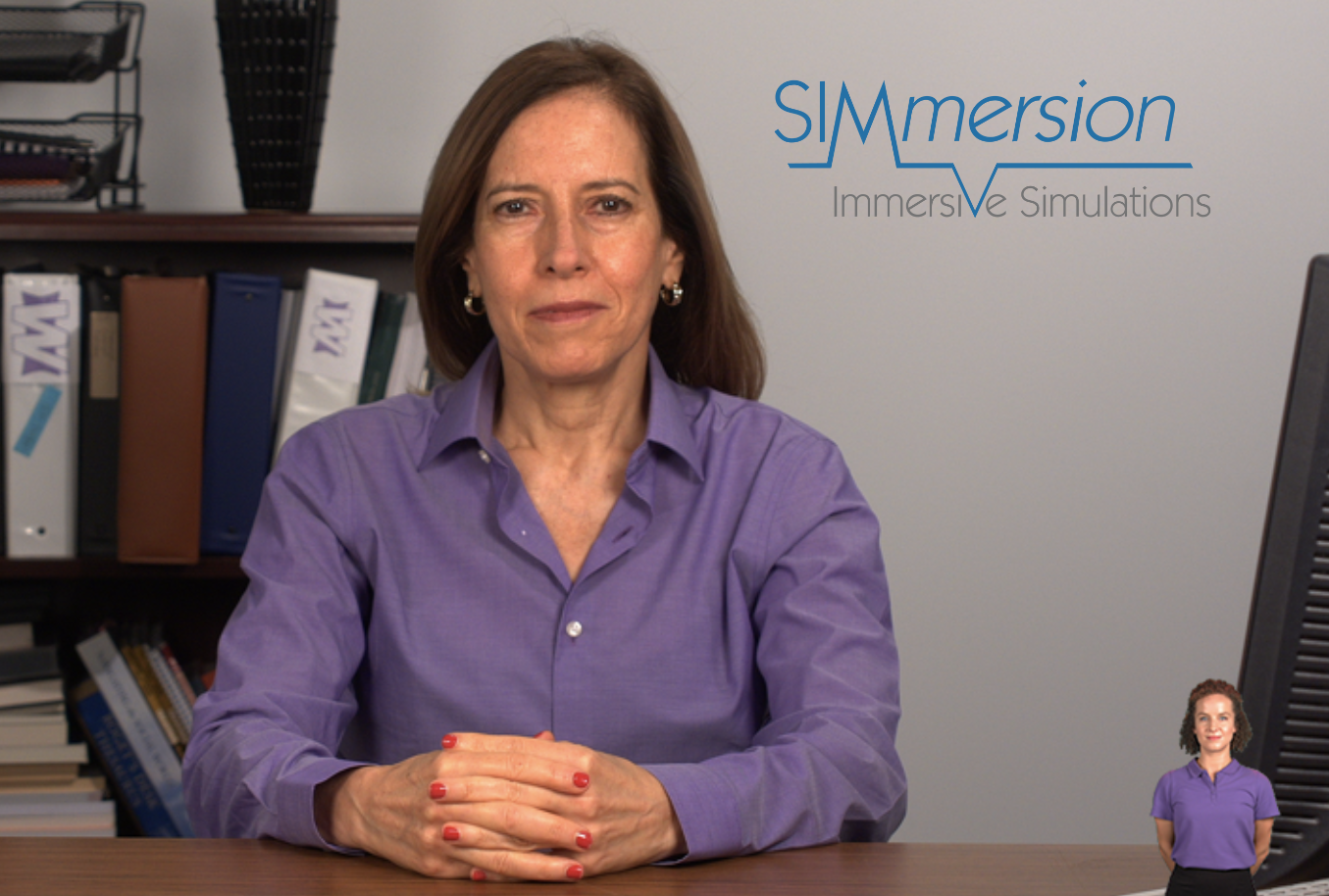
VIT-TAY is a virtual interview training program created by SIMmersion, LLC in collaboration with the University of Michigan. This self-paced, web-based program includes comprehensive e-learning content, a mock online job application, and a virtual interview simulator. The full title of the program listed on SIMmersion's website is Job Interview Training: Transition-Age Youth with Rita Muniz and Travis Bishop. In this toolkit, we refer to the program as VIT-TAY.
VIT-TAY was designed for transition-age youth with autism and adapted for youth who are B/LV. A third-party evaluator certified that VIT-TAY meets Web Content Accessibility Guidelines 2.0 AA standards.
Basic Requirements for Using VIT-TAY
Transition-age youth who are B/LV and interested in using the program need to
- Have access to a device (e.g., computer or tablet) with an internet connection.
- Read at a 4th-grade reading level or higher.
- Be familiar with assistive technology (i.e., screen reader or screen magnification).
Quick Start Steps
- Get access to VIT-TAY. Go to SIMmersion's Training Center to access a free trial of VIT-TAY. Purchasing information for groups and individual licenses can be found on SIMmersion’s purchasing page. For more information about pricing, contact Courtney Small at Courtney.small@simmersion.com.
- Learn how to use VIT-TAY. Our Job Interview Training: Transition-Age Youth: Implementation Guidelines for Youth who are Blind or Have Low Vision provides guidance on getting started with VIT-TAY. The guide covers research about the program, who should use the program, the prerequisites, tips on how to implement the program (e.g., staff roles, how to incorporate it into your existing program, etc.), and instructional strategies.
What You’ll Find in This Toolkit
This Virtual Interview Training Toolkit includes the following sections:
- Implementation Resources
- Additional Resources
- About the Research
- Frequently Asked Questions
Here are several resources that can help you implement VIT-TAY.
- Job Interview Training: Transition-Age Youth: Implementation Guidelines for Youth who are Blind or Have Low Vision: This guide provides tips for implementing VIT-TAY with youth who are B/LV, including keyboard shortcuts for JAWS users.
- Implementing Virtual Interview Training for Transition-Age Youth: Practical Strategies for Educators: This article provides practical strategies for implementing VIT-TAY with students with disabilities.
- University of Michigan Level Up Lab: This website has information and resources related to VIT-TAY and other simulations.
- Virtual Interview Training Orientation Videos: A YouTube video series from the University of Michigan Level Up Lab.
Here are additional resources for supporting transition-age youth in developing job interview skills and preparing for employment.
NRTC Resources
- 4to24 is a free app for parents of children and youth, and older youth, who are B/LV that focuses on building independence over time to prepare youth for successful employment and independent living as adults.
- Preparing for a Video Interview includes two short videos that can guide discussions with transition-age youth on the dos and don’ts of doing job interviews remotely via videoconferencing software.
- Putting Your Best Foot Forward (PYBFF) is a job search skills training program designed for transition-age youth who are B/LV. The NRTC offers free trainer workshops to service providers interested in becoming PYBFF trainers.
- SSI and Work are fact sheets for parents and youth that outline the benefits of working while maintaining Supplemental Security Income (SSI) payments.
External Resources
- American Printing House for the Blind (APH) CareerConnect provides information and resources on interviewing and other employment-related topics.
- Job Accommodation Network (JAN) provides guidance on workplace accommodations for people with disabilities.
- CareerOneStop and O*NET offer tools for job exploration and interview preparation.
Previous Research
Findings from previous studies support VIT-TAY's acceptability and effectiveness in improving outcomes for transition-age youth with disabilities. In a randomized controlled trial, VIT-TAY improved job interview skills, job interview anxiety, and competitive employment outcomes of autistic youth (Smith et al., 2021). Teachers and administrators rated VIT-TAY as acceptable and appropriate for transition services, and autistic youth found VIT-TAY usable and acceptable (Sherwood et al., 2023). In a large-scale quasi-experimental study, completing more virtual interviews with VIT-TAY was linked to higher competitive employment rates among youth with non-visual disabilities (Smith et al., 2024).
Project Summary
Early paid work experience predicts better future employment outcomes for youth who are B/LV, particularly when youth find their own jobs. Interview skills are important for finding jobs, but research on the best programs or methods for improving job interview skills of youth who are B/LV is limited. Despite the positive findings regarding virtual interview training programs (e.g., VIT-TAY) for other youth disability populations, these programs had not been tested with youth who are B/LV. The National Research and Training Center on Blindness and Low Vision (NRTC) addressed these gaps by evaluating the effectiveness of VIT-TAY for youth who are B/LV. This project involved three main phases:
- Adapt VIT-TAY for youth who are B/LV. The research team and stakeholders with B/LV reviewed VIT-TAY's e-learning content and did preliminary testing of its accessibility and usability. Based on stakeholders’ feedback, the research team worked closely with SIMmersion to adapt the e-learning content to improve its relevance for youth who are B/LV and make initial technical updates to improve screen reader navigation.
- Evaluate VIT-TAY’s usability. The research team did a usability study with 10 youth who are B/LV. Participants completed a series of tasks with VIT-TAY using their usual screen reader or screen magnification software and shared their thoughts along the way. The researchers recorded participants’ interactions with VIT-TAY and asked for feedback about their experience with the product. SIMmersion used the findings to update VIT-TAY to improve its usability and accessibility.
- Evaluate VIT-TAY’s effectiveness. The research team did a randomized controlled trial to assess the initial effectiveness of VIT-TAY for youth who are B/LV. The researchers randomly assigned participants to one of two groups. The control group received their usual school- and community-based services. The intervention group received usual services and used VIT-TAY with support from trained agency staff. The researchers assessed participants' job interview skills, job interview self-efficacy, job interview anxiety, and employment outcomes to determine if VIT-TAY was more effective than usual services.
Research Highlights
Usability
The overall task success rate in the VIT-TAY usability study was 83%, indicating that participants completed most tasks without assistance. Success rates for key tasks were 100% for exploring the home screen, 90% for completing a virtual interview, and 60% for finding a disability disclosure example.
The average System Usability Scale score was 79.5, which exceeds the industry standard of 68 and indicates that participants found VIT-TAY highly usable. All participants reported that they would recommend VIT-TAY to other youth who are B/LV.
Participants' feedback highlighted VIT-TAY's realism and the value of its disability-related content. One participant commented that VIT-TAY felt more realistic than other educational tools:
I like the videos because [they] had real people in [them], real figures… it wasn’t like any of that little kid animated stuff... I was able to connect to it because it was like real life.
Participants appreciated the focus on topics that often receive less attention, such as disability disclosure and legal rights. One said:
We should be learning a lot of these things and our rights through the ADA and everything like that. But, we just are not taught that. And this is very crucial information that we should know and just so we don’t get taken advantage of.
Effectiveness
Findings from the randomized controlled trial support VIT-TAY's effectiveness in improving job interview skills for youth who are B/LV. Youth who used VIT-TAY had statistically significant improvements in job interview skills compared with youth who only received their usual services. Screen reader users had the most substantial gains in interview skills after using VIT-TAY.
We also found that youth who spent more time working through VIT-TAY’s e-learning content tended to have better interview performance. When examining specific interview skills, VIT-TAY helped youth improve in the following areas:
- Showing honesty and trustworthiness.
- Talking about career goals.
- Emphasizing strengths over limitations.
- Giving relevant examples of their skills.
This study did not show that VIT-TAY improved interview self-efficacy, interview anxiety, or competitive employment for youth who are B/LV, compared to usual services.
Funding and Disclosures
This project was funded by NIDILRR under the 2020–2025 Rehabilitation Research and Training Center on Employment of People who are Blind or Have Low Vision grant (90RTEM0007). Dr. Matthew Smith served as a consultant on this project. The University of Michigan receives royalties from SIMmersion, LLC on the sales of VIT-TAY; these royalties are shared with Dr. Smith and the University of Michigan School of Social Work. Dr. Smith did not collect or analyze any data for this project.
References and Project Outputs
Cmar, J. L., Steverson, A., & Smith, M. J. (in press). Initial effectiveness of Virtual Interview Training for Transition-Age Youth with visual impairments. Journal of Visual Impairment & Blindness.
Cmar, J. L. (2025). Virtual interview training for transition-age youth: Putting research into practice [Online continuing education course]. The National Research and Training Center on Blindness and Low Vision. https://nrtc.catalog.instructure.com/courses/virtual-interview-training-for-transition-age-youth-putting-research-into-practice
Sherwood, K., Smith, M. J., Ross, B., Johnson, J., Harrington, M., Blajeski, S., DaWalt, L., Bishop, L., & Smith, J. D. (2023). Mixed methods implementation evaluation of virtual interview training for transition-age autistic youth in pre-employment transition services. Journal of Vocational Rehabilitation, 58(2), 139–154. https://doi.org/10.3233/JVR-230004
Smith, M. J., Sherwood, K., Ross, B., Smith, J. D., DaWalt, L., Bishop, L., Humm, L., Elkins, J., & Steacy, C. (2021). Virtual interview training for autistic transition age youth: A randomized controlled feasibility and effectiveness trial. Autism, 25(6), 1536–1552. https://doi.org/10.1177/1362361321989928
Smith, M. J., Van Ryzin, M., Jordan, N., Atkins, M., Bornheimer, L. A., Sherwood, K., & Smith, J. D. (2024). Virtual job interview training: A dose response to improve employment for transition-age youth with disabilities. Career Development and Transition for Exceptional Individuals, 47(2), 92–105. https://doi.org/10.1177/21651434231160532
Steverson, A., Cmar, J. L., Humm, L., & Smith, M. J. (2025). Evaluating the usability of Virtual Interview Training for Transition-Age Youth with visual impairments. International Journal of Human–Computer Interaction, 41(18), 11668–11677. https://doi.org/10.1080/10447318.2024.2443803
Getting Started
What is VIT-TAY, and how do I access it?
VIT-TAY stands for Virtual Interview Training for Transition-Age Youth. It’s an interactive, web-based program where youth can practice interviewing with virtual hiring managers for a fictional company called Wondersmart. You can access the program (full title: Job Interview Training: Transition-Age Youth with Rita Muniz and Travis Bishop) through SIMmersion’s Training Center website.
How much does VIT-TAY cost?
Both group and individual licenses are available. For current pricing and licensing options, contact SIMmersion’s Client Services Specialist, Courtney Small, at Courtney.small@simmersion.com or request pricing information online.
What is the recommended age range for youth using VIT-TAY?
The program is designed for transition-age youth ages 15 to 26 years. It may be best suited for high school students with little to no work experience who are preparing for the workforce.
What skills should youth have before starting VIT-TAY?
For independent use, youth should have at least a 4th-grade reading level in English; have basic internet navigation skills (like logging in to an account, finding information, accessing links and buttons); and be comfortable using a screen reader, screen magnification software, or other assistive technology they need to access a computer or tablet.
How much time does VIT-TAY take to complete?
VIT-TAY is self-paced. Most youth complete it in 10 to 12 hours, but some will need more or less time. We recommend short, frequent sessions of about 30 to 60 minutes per day across 1 to 2 months.
Devices and Accessibility
Do I need special equipment or software to use VIT-TAY?
No specialized equipment is required, but you will need a computer (PC or Mac) or tablet with a high-speed internet connection. A built-in or external microphone is required to use the optional speech recognition feature. The program also runs on mobile devices, but a computer or tablet is usually a better option for youth who are B/LV.
What internet browsers work best with VIT-TAY?
Supported browsers include Google Chrome, Firefox, and Microsoft Edge. Chrome is recommended when using speech recognition. Safari is not supported.
Is VIT-TAY accessible?
Yes, VIT-TAY meets Web Content Accessibility Guidelines 2.0 AA standards. It has built-in accessibility features and is compatible with screen magnification software and screen readers, including JAWS and NVDA. It also works with accessibility features (e.g., VoiceOver) on computers and tablets.
Are there keyboard shortcuts for screen reader users?
Yes, screen reader users can navigate the program using standard keyboard shortcuts. A “JAWS Cheat Sheet” with tips for keyboard navigation is available in the Job Interview Training: Transition-Age Youth: Implementation Guidelines for Youth who are Blind or Have Low Vision.
Content and Implementation
What topics does VIT-TAY cover besides interviews?
The Interview Basics e-learning section covers the entire job search process, including finding job openings, writing resumes, and disclosing a disability. The Job Application section includes a mock job application and offers tips for completing each section.
How many virtual interviews should youth complete for best results?
This number will vary, but we typically recommend a minimum of 9 virtual interviews as a starting point. This includes completing 3 to 5 interviews at Level 1, 3 to 5 interviews at Level 2, and 3 or more interviews at Level 3.
What feedback does VIT-TAY provide?
It provides real-time feedback during each interview, interview transcripts with feedback on responses, a numerical score out of 100, and summative post-interview feedback.
Can VIT-TAY be used in group settings?
Yes, it can be used for individual or group instruction. When working with groups, service providers can use the content to guide group discussions or have the group complete a virtual interview together by polling youth on how to respond to each question.
How can I learn how to implement VIT-TAY?
Become familiar with the program by exploring it yourself. For more information and tips, check out the resources in the Implementation Resources section of this toolkit.
Can I integrate VIT-TAY with other transition programs?
Yes, VIT-TAY is meant to complement, not replace, existing services like pre-employment transition services. It can be used with other programs and curricula to introduce concepts and skills, reinforce learning, and provide hands-on practice.
How do I track youths’ progress?
Service providers can use SIMmersion’s Administrative Center to assign accounts, track usage, access scores, and review transcripts.
Troubleshooting
What should I do if someone can’t log in to VIT-TAY?
Check the Administrative Center to confirm that the account has an active license assigned to it. Ensure the person has a stable internet connection and is using the correct username and password.
What if the program freezes or doesn’t load properly?
Try closing the internet browser, reopening it, and relaunching the program. If that does not resolve the issue, clear the browser’s cache and cookies, then relaunch the program. If using Chrome, running the program in Incognito mode may resolve the issue.
Who do I contact for technical support?
For technical assistance with SIMmersion’s products, email sal@simmersion.atlassian.net or submit a request online.
The contents of this toolkit were developed under a grant from the U.S. Department of Health and Human Services, NIDILRR grant 90RTEM0007. However, these contents do not necessarily represent the policy of the Department of Health and Human Services and should not indicate endorsement by the Federal Government.